Season 3 Episode 4: Sarah Bares All


"The fact of tears not being shed at a very early age from pain or any mental emotion is remarkable, as, later in life, no expression is more general or more strongly marked than weeping."  pg 154 EEMA Charles Darwin.


In this episode we explore Chapter VI: Suffering and Weeping where Darwin describes in excruciating detail the muscles involved in the crying face of infants and how tears are formed in the lacrimal glands. This chapter is the first one in the book to use photographic images to represent the expression of the emotions Darwin is describing. We discussed Plate 1 in detail and it can be seen here:

Sarah discussed Duchenne's original photograph that Darwin showed people to see if they could recognize the emotion based upon the stimulation of specific facial muscles.  In the 3rd Edition of the book, Ekman includes the original photograph that was not actually in the earlier editions of the book.


James discussed his amazement on where in his body tears are made, and where they go ultimately. The lacrimal glands reside above the eye and the tear duct, where James erroneously thought tears came from, is the location where tears drain into the back of your throat. 
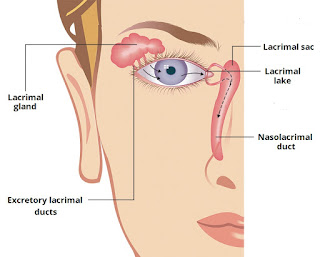
Image from: https://teachmeanatomy.info/head/organs/eye/lacrimal-gland/


We relied on a number of original research papers to help us understand the topic. Some of the papers we cited can be found here:

Becht, Marleen C., and Ad JJM Vingerhoets. "Crying and mood change: A cross-cultural study." Cognition & Emotion 16.1 (2002): 87-101.

Gračanin, Asmir, Lauren M. Bylsma, and Ad JJM Vingerhoets. "Why only humans shed emotional tears." Human Nature 29.2 (2018): 104-133.

Oriá, Arianne P., et al. "Comparison of Electrolyte Composition and Crystallization Patterns in Bird and Reptile Tears." Frontiers in Veterinary Science 7 (2020): 574. 

Yong, Min Hooi, and Ted Ruffman. "Emotional contagion: Dogs and humans show a similar physiological response to human infant crying.Behavioural processes 108 (2014): 155-165.


The opening and closing theme to Discovering Darwin is "May" by Jared C. Balogh.

Intermission music "Cryin" by Chris Isaak

Season 3 Episode 3: Erected Neck-hackles


In this episode we discuss Chapters 4 & 5 of Darwin's The Expression of the Emotions of Man and Animals, 3rd Definitive edition. Chapter 4 documented how animals use specific sounds and body postures to communicate their current emotional state. We explored how familiar we are to the sounds of domestic dogs and cats and the information they encode in their vocalizations. James was intrigued with the idea that early human language may have been more musical than expected. Mark spoke about the work of Dr. Diana Deutsch and her discovery we can extract music from spoken words. Here is the link to the wonderful Radiolab story that covers this phenomenon. At the end of our discussion Mark read a quote from Darwin concerning the behavior of fighting cocks to erect their neck feathers - something "Every one must have seen two cocks...preparing to fight with erected neck-hackles. 
Photo from https://www.behance.net/gallery/4810345/Cockfighting-in-Thailand
We discussed if it was legitimate for Darwin to identify the behaviors he was describing in dogs, cats, horses, monkeys and apes as being fear, affection, joy, anger and astonishment. Mark brought up the idea of Morgan's Canon, which argued against using complex anthropomorphic interpretations of a behavior when a simpler, basal behavioral state can explain the behavior. For example, Tony, Morgan's terrier opened the gate through trial and error and not because of some insight about the gate mechanism.
Tony opening the gate so he can go out and sniff some butts
Sarah noted that Darwin seemed to ignore the evolutionary history of dogs and cats to help explain their behaviors. Domestic dogs evolved from wolves, a social pack animal, which can explain the complex set of stereotypical dominant and submissive behaviors they exhibit whereas domestic cats evolved from wild cats that were solitary. James declared that Jackals, a group of canines that Darwin incorrectly proposed to be the progenitor of some smaller breeds of dogs, were solitary. Turns out, Jackals are typically found as monogamous pairs, but the social group can increase with young. So they are not solitary like big cats, but they are not as social as wolves.


The opening and closing theme to Discovering Darwin is "May" by Jared C. Balogh.

Season 3 Episode 2: Everyone has a Tell


In this episode we discuss the first three chapters of Darwin's On the Expression and Emotion of Man and Animals, and James fails to convince the team to refer to the book as EEMA for short. The first chapters of EEMA lays out Darwin's 3 principle foundations and each of us focused on one of the principles. The three principles are:

I. The principle of serviceable associated Habits.—or "I wear my emotions on my sleeve"

II. The principle of Antithesis.— or "Turn that frown upside down"

III. The principle of actions due to the constitution of the Nervous System, - or "Everyone has a tell"
One of the issues we discussed is what Darwin meant by "serviceable" when referring to the physical manifestation of the emotions. It seemed that Darwin felt that the clinched fist when angry or the closing of your eyes when you are startled by a loud noise are adaptive reflexes to prepare or protect you from the perceived threat that would accompany that emotion.

We discussed the oddity of Principle 2 in that Darwin seemed to not give adaptive value to the associated behaviors but saw them more as an opposite signal of the emotion associated with Principle 1. One of the clear examples Darwin discussed was the behaviors we see in our dogs and cats when they are expressing anger compared to when they are expressing happiness.
Fig. 5. Dog approaching another dog with hostile intentions. By Mr. Riviere.
image from http://darwin-online.org.uk/

Fig. 6. The Same in a humble and affectionate frame of mind. By Mr. Riviere.
image from http://darwin-online.org.uk/


James was enamored by the block print of the dog that seemed to be quite friendly with a person's leg. Here is the image.

At the end of the podcast we discussed a paper written by Gregory Radick entitled Darwin's Puzzling Expression. Wonderfully the article  is available for free as well as the entire issue of

Comptes Rendus Biologies

Volume 333, Issue 2, February 2010, Pages 181-187

 which can be found here.


The opening and closing theme to Discovering Darwin is "May" by Jared C. Balogh.
Interlude music is Lobo Loco - Spencer Bluegrass 

Season 3 Episode 1 - Darwin's Hobby-Horse


This is the first episode of the long awaited Season 3 of Discovering Darwin. In this season we will be exploring Charles Darwin's 14th original published book entitled The Expression of the Emotions in Man and Animals. We are reading the 3rd Edition of the book that has been edited by Paul Ekman. Dr. Mark Jackson, Psychology professor at Transylvania University is joining us this season as we tackle this unusual book by Charles Darwin.

One of things that makes this book so unusual is that it is considered the first scientific book to utilize photographs. The French neurologist Guillaume-Benjamin-Amand Duchenne had found a man who seemed to lack the ability to feel pain so Duchenne was able to apply electrical probes to stimulate muscle contractions. By carefully stimulating certain muscle groups, Duchenne was able to get his "Old Man" to hold an expression long enough to be captured in a photograph using the early camera system of the times that required long exposure times. 


We discussed how Charles began taking notes for this book 33 years earlier when his first child , William Erasmus Darwin, was born. Here is the sweet photograph of a proud father, Charles Darwin, sits with his son William. We discussed the functionality of dressing all young children, regardless of their gender, in dresses.   


One of the people that Darwin was reacting to as he wrote his Expression and Emotions of Man and Animals was Charles Bell, a talented artist and anatomist. One of Bell's hypothesis was that emotions are a uniquely human trait that were given to us by our creator and he would show muscle sets that were "unique" to humans for expressing emotions. Darwin, opposed that creation view, and worked to adopt his idea of evolution by descent with modification to explain how emotions, like other traits, in humans when compared to other animals "...do not differ in kind, although immensely in degree." [Descent of Man 1871].

James described how beautiful the drawings of Bell were and mentioned the hand on the book illustration as represented below.


So what expression do you think this image represents?


The opening and closing theme to Discovering Darwin is "May" by Jared C. Balogh.

Season 2 Episode 10 - Home Again, Home Again, Jiggidy Jig


In this, the final episode of Season 2, Darwin does some island hoping, takes a surprising return trip to Brazil, and on October 2, 1836, finishes his 4 year 9 month journey. In this episode of the podcast we are joined by Dr. Belinda Sly, a evolutionary developmental biologist and colleague of ours, to discuss Darwin, his thoughts about the voyage, and if it had an effect on Darwin's mental health.

The final two chapters of the Voyage of the Beagle are unusual in that Darwin's writing style oscillates between dry technical accounts on how coral atolls are formed, and how different plants, insects, and animals naturally colonize these isolated islands in the middle of the ocean with very melodic and romantic descriptions of the landscapes and peoples he encountered on these far away islands.

Atolls
http://geologylearn.blogspot.com/
One can imagine how disorienting sailors must have been when they first encountered the unusual geological structure of an island atoll.
http://geologylearn.blogspot.com/

A ring structure of land that either encompasses a calm marine harbor that may or may not also include an island in the middle, as seen in the Bora Bora atoll above. Darwin proposed that these unique structures came about through two natural process occurring at the same rate. The volcano that rose from the deep ocean floor and erupted to originally form the island would go dormant and begin to erode away.  Once the volcano had cooled, marine corals would begin to colonize the new island in the shallow waters to create the coral reef. Slowly the volcano would subside back into the ocean and concurrently the corals would grow upward and outward at the same rate as the island eroded and sank.
http://darwin-online.org.uk/
Darwin was the first to actually propose the correct geological model for atoll formation and he spends many pages of Chapter XX explaining his model.

Unfortunately Dr. Josh Adkins was unable to join us on the final episode but you can get your Josh fix by listening to his award-winning podcast The CromCast, a podcast dedicated to weird fiction that also has the occasional Bourbons and Barbarians episodes, a series that entertainingly combine bourbon with old school D&D.


The opening and closing theme to Discovering Darwin is "May" by Jared C. Balogh.

Interlude music is Remember the Way by Mid Air Machine

Season 2 Episode 9-without sorrow or regret


"At daylight, Tahiti, an island which must for ever remain classical to the voyager in the South Sea, was in view. At a distance the appearance was not attractive. The luxuriant vegetation of the lower part could not yet be seen, and as the clouds rolled past, the wildest and most precipitous peaks showed themselves towards the centre of the island. As soon as we anchored in Matavai Bay, we were surrounded by canoes. This was our Sunday, but the Monday of Tahiti: if the case had been reversed, we should not have received a single visit; for the injunction not to launch a canoe on the sabbath is rigidly obeyed. After dinner we landed to enjoy all the delights produced by the first impressions of a new country, and that country the charming Tahiti. A crowd of men, women, and children, was collected on the memorable Point Venus, ready to receive us with laughing, merry faces." Chapter XVIII-Voyage of the Beagle 

After 1.5 year absence, Sarah, Josh and James return to the podcast to finish Voyage of the Beagle. We left Charles out in the Pacific Ocean, sailing the 3,200 miles from the Galapagos to Tahiti. It took the Beagle nearly a month to cover that distance and the sailing was difficult. Tahiti was a welcome sight.
A long and brilliantly-white beach is capped by a margin of green vegetation; and the strip, looking either way, rapidly narrows away in the distance, and sinks beneath the horizon. From the mast-head a wide expanse of smooth water can be seen within the ring. These low hollow coral islands bear no proportion to the vast ocean out of which they abruptly rise; and it seems wonderful, that such weak invaders are not overwhelmed, by the all-powerful and never-tiring waves of that great sea, miscalled the Pacific.

An Aerial View Of Tahiti...
By Sylvain Grandadam

 Darwin enjoyed the hospitality of the native Tahitians and the rich abundance of fruits, roasted bananas and pineapples, which he admitted tasted better than any pineapple cultivated in a hothouse in England.  While in Tahiti, Darwin embarked on the last of his difficult and challenging hikes when he went with two native Tahitians to hike into the valley of Tia-auru. When I lived in Kauai I hiked around the north shore and I imagine the landscape there is not much different from the Tahitian landscape, both are volcanic islands with Kauai being older (5 million years old) than Tahiti (1.6 million years old).
View of a valley in Kauai that looks like Tahitian landscape

In New Zealand Darwin noted the cultural tradition of the native New Zealanders (Maori) tattooing their lips and areas around their face. We discussed how Darwin recognized the role of fashion in a culture and admitted that his bare un-tattooed face was as unsettling to the Maoris as their inked faces were to him.

http://servatius.blogspot.com/2015/10/maori-couple-1880s-with-facial-tattoos.html

A wonderful description of Maori traditional tattoos can be found here.

Calling for Suggestions

Dear Listeners-

We will be recording the final episode of Season 2 Discovering Darwin in the upcoming weeks and we are asking for suggestions for Season 3. We are open to doing a close reading on a Darwin book, if you are unfamiliar with all of the works of Charles Darwin check out Darwin Online  to see the options available. Or we can focus Season 3 on a topic or text in the style of Season 2 - Darwin the Adventurer - which used the Voyage of the Beagle as a framework for our episodes. Please make your listener's requests in the comment section of this Blogspot. We look forward to hearing your ideas. Thanks for your support.